

Choosing a Laddu Gopal Singhasan: Size, Style and Comfort for Your Idol
-
Aarti Yadav
- Posted on
- 0 comments
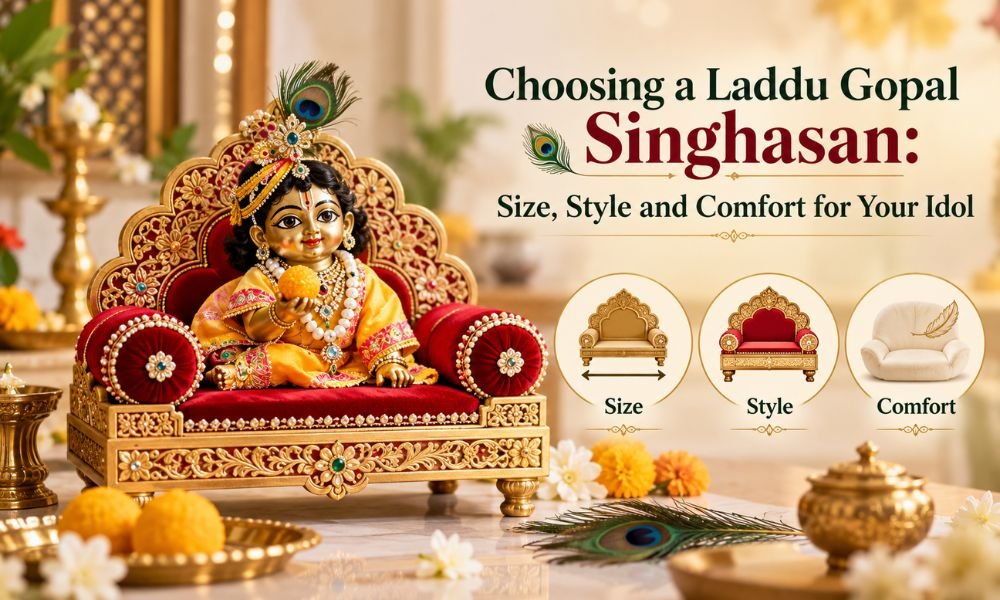
Creating a beautiful space for Laddu Gopal is a meaningful part of daily worship for many devotees. From selecting an attractive poshak to arranging shringar accessories, every detail helps make a home mandir feel welcoming. One important element of this arrangement is the singhasan, a devotional throne that provides a dedicated place for the beloved deity.
A well-chosen Laddu Gopal singhasan can enhance the appearance of your mandir while keeping the idol securely positioned. With so many sizes, materials, colours, and designs available, choosing the right one requires some thought. The best option is not necessarily the most expensive or elaborate. It is the one that suits the idol, fits the available space, and complements your daily worship routine.
Whether you are setting up a new mandir, refreshing your existing devotional space, or selecting a thoughtful religious gift, understanding a few essential factors can help you make the right choice.
1. Choose the Right Size for Your Laddu Gopal Idol
Size is one of the first things to consider when purchasing a singhasan. Laddu Gopal idols come in different sizes, and the throne should provide enough room for the idol to sit securely without looking cramped or disproportionate.
Before shopping, check the height and dimensions of your idol. Pay attention to the seating area’s width and depth, especially if you plan to place a small cushion or decorative cloth underneath it. If the singhasan has an ornamental arch or raised backrest, consider its overall height as well.
A throne that is too small may make positioning the idol difficult, while an oversized design can take up unnecessary space in a compact mandir.
Keep these points in mind when comparing products:
- Check the width and depth of the seating area.
- Consider the height of the backrest and decorative elements.
- Ensure that the idol can sit securely on the base.
- Allow enough room for a cushion or decorative fabric if needed.
- Measure your mandir shelf before placing an order.
When shopping online, always check the listed measurements instead of judging the size from product photographs alone. A properly sized singhasan creates a balanced appearance and makes arranging the idol easier.
2. Select a Style That Complements Your Mandir
Laddu Gopal singhasans are available in various styles, ranging from traditional ornamental thrones to simple contemporary designs. Your selection should complement the existing mandir decorations and reflect your personal preferences.
Traditional designs may feature decorative arches, carved patterns, ornamental pillars, or detailed backrests. These can suit devotees who prefer a classic temple-inspired setting. Simpler options may work better in modern homes or smaller puja spaces.
Consider the decorations already present in your mandir. If you use colourful backdrops, decorative fabrics, and several shringar accessories, a simple throne can help maintain a balanced appearance. In a minimal setting, an intricately designed singhasan can become an attractive focal point.
You should also think about whether the throne will be used throughout the year or mainly during festivals. A versatile design can look appropriate during daily worship as well as special celebrations.
The goal is to choose a style that enhances your devotional space without making it appear overcrowded.
3. Pay Attention to Material and Build Quality
The material of a singhasan influences its appearance, weight, durability, and maintenance requirements. Common options include wood, metal, resin, and other decorative materials. Each offers different characteristics, so consider how you intend to use the throne before deciding.
Wooden singhasans often have a warm, traditional appearance and may feature carved or painted details. Metal designs can offer intricate patterns and decorative finishes, while resin options may be available in a wide range of shapes and styles.
Regardless of the material, examine the construction carefully. The base should be stable, the edges should be properly finished, and decorative components should be securely attached. Avoid products with sharp edges, loose parts, cracks, or visible damage.
Weight is another consideration. A lightweight throne may be easier to move when cleaning the mandir, while a heavier design may remain more firmly in place. The quality of the base and overall stability matter more than weight alone.
Choosing a well-made singhasan helps ensure that it remains suitable for regular use while maintaining its appearance.
4. Look for a Stable and Suitable Seating Area
Although a singhasan is a decorative throne, its practical purpose is to provide an appropriate place for the idol. The seating area should be level, stable, and large enough to support Laddu Gopal properly.
Check the shape and depth of the seat before purchasing. If you plan to place a cushion or soft fabric underneath the idol, make sure there is sufficient room without making the seating arrangement unstable.
A firm, level base is particularly important. The singhasan should not wobble when placed on the mandir shelf or platform. If the design includes side decorations, pillars, or a raised backrest, ensure these features do not interfere with positioning the idol.
Some devotees enjoy adding a decorative cushion to complement the poshak. If you choose to do this, consider its thickness and how it affects the idol’s position.
A stable and appropriately sized seating area makes daily worship, clothing changes, and shringar arrangements more convenient.
5. Choose Colours That Match the Poshak
The colour of a singhasan can influence the overall appearance of your devotional space. A suitable shade can complement Laddu Gopal’s poshak, decorative fabrics, and surrounding mandir accessories.
Gold and silver finishes are popular choices for traditional arrangements because they coordinate with many colours. White and cream can create a simple, elegant appearance, while red, pink, and other vibrant shades may suit more colourful settings.
Before choosing a colour, consider the outfits you already own. If you frequently dress Laddu Gopal in bright shades, a neutral-coloured singhasan can work with different poshaks throughout the year. If your mandir follows a particular colour theme, selecting a matching finish can create a coordinated look.
You can also choose contrasting colours to make the throne stand out. A light-coloured singhasan may complement darker fabrics, while a gold-toned finish can pair well with richly coloured clothing.
There is no single correct colour for every mandir. Choose one that suits your preferences and allows the idol to remain the centre of attention.
6. Consider Cleaning and Maintenance
Regular cleaning helps keep your devotional space neat, so the maintenance requirements of a singhasan should not be overlooked. Decorative carvings, narrow gaps, and intricate patterns can collect dust, while simpler designs may have surfaces that are easier to wipe.
If you prefer a straightforward cleaning routine, consider a design with accessible surfaces and manageable detailing. More elaborate thrones can also be suitable, but they may require a soft brush or cloth to clean smaller areas.
Always follow care instructions appropriate to the material. Wooden finishes, painted surfaces, and decorative embellishments may be damaged by excessive moisture or harsh cleaning products.
If you frequently move the throne while cleaning the mandir, consider whether its size and weight make handling convenient. Avoid dragging it across a shelf, as this may damage the base or the surface underneath.
Selecting a design that matches your maintenance routine can help preserve its appearance without adding unnecessary work.
7. Measure the Available Mandir Space
Even an attractive singhasan may not be suitable if it does not fit comfortably into your mandir. Before purchasing, measure the width, depth, and height of the intended placement area.
Leave enough room for other puja essentials, including a diya, incense holder, flowers, and shringar accessories. The idol should also be easy to reach when you need to change its poshak or arrange its ornaments.
For a small home mandir, a compact throne with a simple design may be more practical. Larger spaces can accommodate wider seats and more elaborate decorative features.
Consider the height of the singhasan in relation to any shelves or cabinets above it. A tall backrest or ornamental arch should not make the arrangement feel cramped.
Planning the placement in advance helps create a neat, balanced, and accessible devotional space.
8. Check Product Details Before Buying Online
Online shopping makes it easier to compare different singhasan designs, but photographs do not always show every product detail. Reading the description carefully can help you make an informed decision.
Check the dimensions, material, finish, weight, and included accessories. Some products may include a cushion or decorative elements, while others feature only the throne itself.
Customer reviews and additional photographs can provide useful information about the actual appearance and construction. If measurements are unclear, contact the seller before placing an order.
You should also check the delivery timeline and return or exchange policy, especially if you are purchasing a particular size for your idol. Compare prices alongside craftsmanship, stability, and maintenance requirements rather than choosing based on cost alone.
When exploring devotional products for your home mandir, My Laddu Gopal is an option to consider. Taking time to review the available product details can help you find a singhasan that suits your idol and personal preferences.
9. Consider Daily Use and Festive Decorations
Your intended use can help determine which singhasan is most suitable. Some devotees prefer using the same throne throughout the year, while others enjoy refreshing their mandir decorations for Janmashtami and other celebrations.
For daily worship, a sturdy design with a stable base and easy-to-clean surfaces can be practical. If you regularly change poshaks and shringar accessories, ensure the throne provides enough room to handle these tasks comfortably.
For festive occasions, a more decorative singhasan may complement colourful outfits, flowers, and additional mandir decorations. However, consider whether the design will also look appropriate during ordinary days.
A versatile throne can be a useful long-term choice because it allows you to refresh the appearance of your mandir without replacing the main seating arrangement for every occasion.
Conclusion
Choosing a Laddu Gopal singhasan involves balancing size, style, stability, material, and ease of maintenance. Start by measuring your idol and the available mandir space, then explore designs and colours that complement your existing poshaks and decorations. Pay attention to the seating area, the quality of construction, and how easily the throne can be cleaned.
A beautiful singhasan does not need to be overly elaborate to make your mandir special. A simple, well-made design can be equally meaningful when it suits your idol and fits naturally into your daily worship routine.
If you are looking for a suitable Laddu Gopal singhasan for your home mandir, My Laddu Gopal offers devotional products and accessories to explore. For enquiries about available designs, sizes, and purchasing details, call 9599648451. Choosing the right singhasan can help you create a beautiful, organised space for daily worship that reflects your devotion and personal style.

